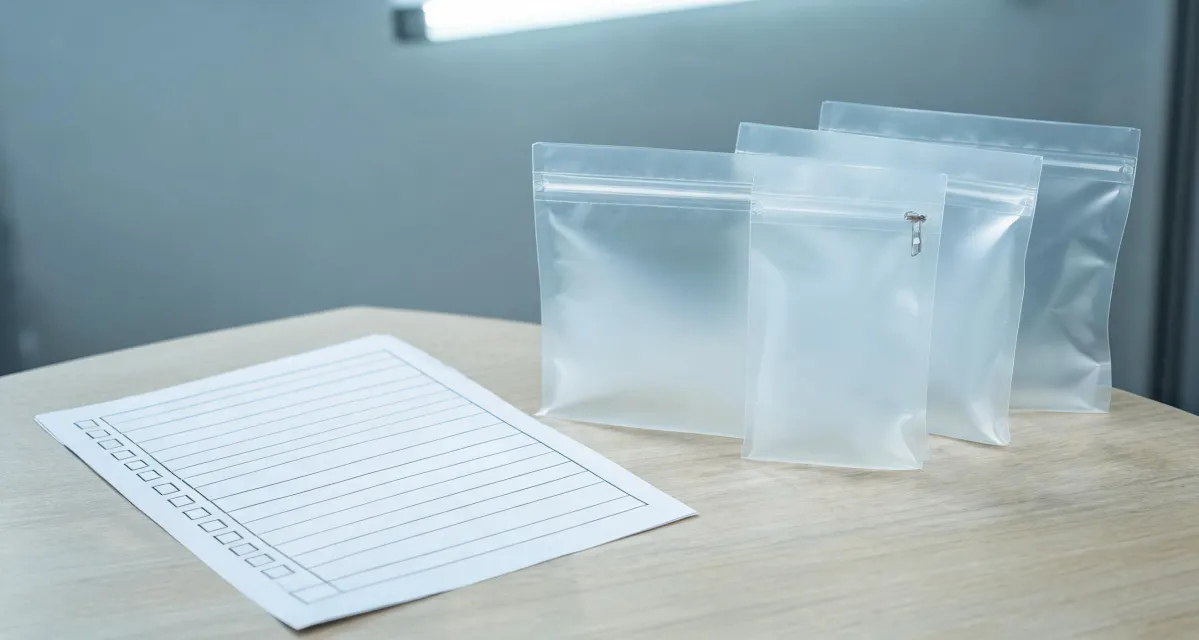
The pouch looked perfect. It still failed.
You ordered 5,000 stand up pouches with zipper—enough to validate a product test before committing to a real run. The boxes arrive. The pouches look sharp: clean print, smooth zipper, tight bottom gusset. You do the usual incoming check—zipper function, print registration, dimensions. Everything passes. You send them to the filling line.
Two days later, the complaints come in. Not a zipper failure. Not a film split. The seal right below the zipper—the one that's supposed to hold the product at bay before the zipper engages—has started peeling. Not dramatically. Just enough to leak a little. Enough to ruin the shipment.
If you've sourced stand up pouch with zipper before, you probably know this scene. And the instinct is to blame the zipper supplier. Or the film. Or the factory that "rushed the job."
But here's what I've found after reviewing pouch deliveries for a consumer brand over the past four years: the zipper is almost never the problem. The problem is the seal around it—and the way that seal gets checked.
What's actually happening at the zipper area
A stand up pouch with zipper isn't just a bag with a zipper stuck on top. The zipper is a multi-part assembly: the zip track itself, a base film, and a sealing layer that has to bond to the pouch's body film. That bond is made under heat and pressure.
Here's the part that catches people: the sealing window for the zipper area is different from the sealing window for the rest of the pouch. The zipper adds thickness. It changes the thermal mass. If the factory runs the same heat-sealing parameters across the entire pouch—which many do, because it's faster—the zipper area gets under-sealed.
Under-sealed doesn't mean visibly weak. The seal can look fine at room temperature. It can pass a quick hand-pull test. But under load, under pressure, or after a few days in transit, it starts to creep.
We had a batch like this in Q3 2024. The vendor's report said "seal strength tested per internal protocol." Whatever that meant. Our own pull test showed the zipper-area seal running at about 1.2 lbf/inch versus our spec of 2.0 minimum. The vendor said it was "within industry norms." Maybe it was—for the body seal. Not for the zipper area.
You can't check what you haven't specified
Part of the problem is that most pouch specs don't break out the zipper area as a separate critical control point. The spec says "seal strength: ≥2.0 lbf/inch" and leaves it at that. It doesn't say where to test, at what temperature, or after what aging period.
I don't have hard data on how many factories actually record zipper-area seal parameters by batch, but based on what I've seen across maybe 40–50 pouch deliveries, I'd estimate fewer than half do it consistently. The rest rely on operator experience—which is fine until the operator changes shift.
And the same issue shows up in adjacent formats. An OEM liquid stand up pouch with spout? The spout base sealing is the same story. A stand up pouch with valve for degassing coffee or chemical products? The valve seating has its own sealed interface that needs its own spec. If your purchase order just says "stand up pouch, zipper, 500g," you're leaving the critical bond lines entirely to the factory's defaults.
The communication gap between zipper supplier and pouch converter
The other thing I didn't fully appreciate until recently: the zipper supplier and the pouch converter are often two different companies. The brand buys pouches from a converter. The converter buys zippers from a zipper maker. Those two entities may never talk about the film compatibility of the zipper's sealing layer versus the pouch's inner sealant layer.
Everything I'd read about sourcing said to match film structures carefully. In practice, the matching problem gets solved at the converter level—or not solved at all. If the zipper's sealant is a standard PE and the pouch's inner layer is a CPP, you can still get a bond. It just may not be the bond you specified.
For wholesale candy bags stand up zipper pouch—where the product is relatively dry and the pouch is low-stress—this rarely matters. For liquids with a spout, or powders that generate internal pressure, it matters a lot.
What this failure costs—especially on small runs
On a 5,000-piece test run, a seal failure hits differently than it does on a 50,000-piece production order. You don't have replacement stock sitting in a warehouse. You don't have time for a redo before the launch window closes. You have a shipment of filled product that's already been sealed, boxed, and staged—and now you're looking at either repacking by hand or scrapping the batch.
As of Q4 2024, our redo on a 5,000-piece run cost about $1,900 after rework fees and expedited freight. That's not catastrophic by itself. But when it's attached to a product test that's supposed to validate a $200,000 annual order, the real cost is the delayed decision.
And here's the part that surprises people: the failure rate is often higher on smaller runs. Not because the factory cares less—because the QC sampling is lighter. A 50,000-piece run gets AQL inspection at multiple stages. A 5,000-piece run gets a quick look and a hand-pull test. The smaller the order, the more the seal quality depends on the operator's attention that day.
That's not a reason to accept it. If anything, small runs need more explicit seal specs, not less. The vendors who take a 5,000-piece order seriously—the ones who still send batch records and seal-strength data—are the ones worth keeping when your volume grows.
A short checklist that prevents most of this
You don't need a new quality system. You need to make the zipper area its own item on the spec sheet and the incoming inspection form. Four things do most of the work:
- Specify zipper-area seal strength separately. Don't bury it in a general "seal strength" line. State the test method (ASTM F88 is the standard peel test), the minimum value, and the acceptable range. Require it on the batch record.
- Ask for the seal parameter record. Temperature, pressure, dwell time for the zipper station—by batch. If the factory can't produce it, that's information.
- Confirm film and zipper compatibility in writing. Ask the converter what zipper grade they're using and what the sealant layer is. It's a five-minute email that prevents a $2,000 redo.
- Test after aging, not just at incoming. A seal that passes at hour zero can creep by day seven. If you can't do seven-day testing on every batch, do it on the first batch of every new film or zipper combination.
This isn't about distrusting your supplier. It's about recognizing that "stand up pouch with zipper sourcing" covers a lot of variables, and the zipper-area seal is the variable most likely to be under-specified—on both sides of the purchase order.
The zipper itself is usually fine. It's the bond around it that needs a closer look.